
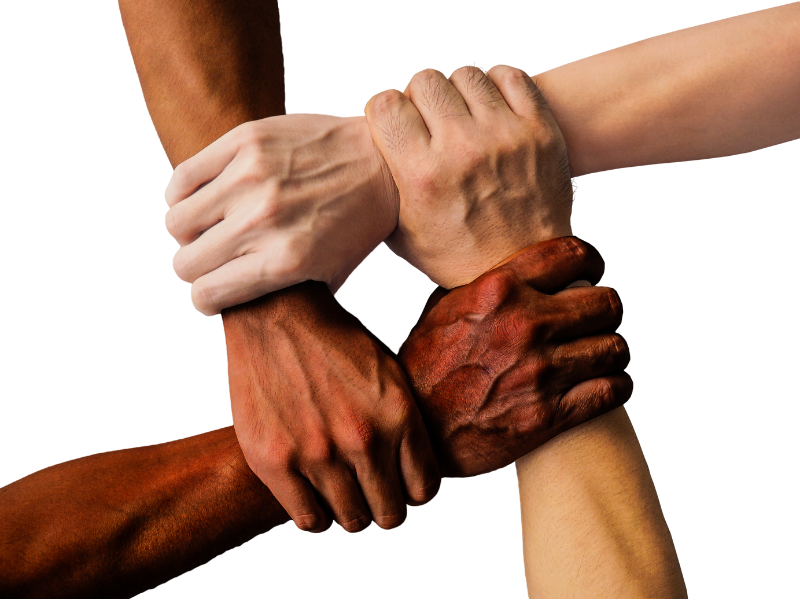
Instead of noticing how different we are from one another, have you noticed how unified we are?
I grew up in the country, outside of a small, rural town with a whopping population of about 3500 people. My hometown had three red lights. My high school graduating class had 100-125 people in it. The town loved to support their local teams, whether it be the high school football team, the high school volleyball team, or the local Little League baseball team.
I left my little hometown for a bigger college town after high school graduation. Then, after college, I moved to Houston. I have lived in Houston for over twenty years. Houston is big, yall! And Houston is diverse. Houston has a full spectrum of people no matter if you are talking about race, religion, social, cultural, or economic groups.
I often make comparisons about urban versus rural living in my mind. There are bold and obvious pros and cons for both environments, however, there is something that unites all of us, no matter where you have come from, what your background is, or where you are going.
All humans struggle.
Struggle brings pain.
Commonality produces connection.
Humans are unified by struggle.
Not all Sunshine and Rainbows
Life does not always play nice. There is the yin and there is the yang. There is the light and there is the dark. There is the good and there is the bad.
Sometimes we can predictably see problems or struggles coming our way. Other times, we get smack-dab, sucker-punched right in the gut with them.
Some of us share our problems with others. And some of us keep all those unfortunate, negative, and unpleasant circumstances quietly tucked away for no one to discover.
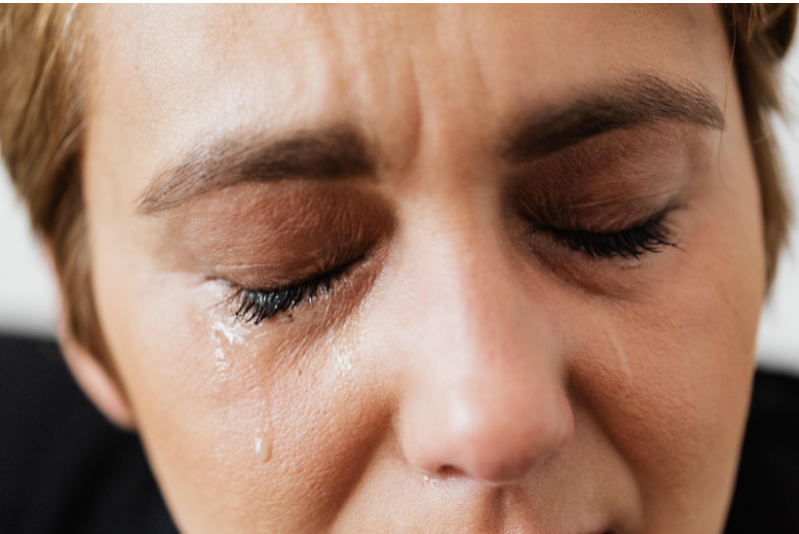
Plato said, “Be kind, for everyone you meet is fighting a hard battle.”
If we know of another person’s unfavorable situation, often, we empathize or sympathize with them. We feel what others feel. We take on other people’s problems in our minds as if they were our problems and we ruminate on them.
Alternatively, we might reject someone else’s struggle because we do not agree with their platform, their opinions, their ideas, or their direction. We pick sides and either struggle with people or against people.
Both options bring their own form of struggle. Nonetheless, we are not alienated in our misery.
Hell in a Handbasket
When it seems like circumstances are going to hell in a handbasket, humans can be good.

Let me give an example. Being a two-decade Houstonian, I have experienced multiple hurricanes that either directly or indirectly affected my family, friends, and neighbors.
- Hurricane Katrina demolished New Orleans in 2005, causing many of its residents to flee and inhabit the Houston area, some temporarily and others permanently.
- Hurricane Ike crossed right over Houston in 2008 and left evacuees stranded on roadways for hours and days until gas pumps could get refilled.
- Hurricane Harvey, the most devastating hurricane in Houston’s history, dumped billions of tons of water over Houston and flooded more than 300,000 homes causing $125 billion in damage (per Wiki).
Given these events that brought on much pain, hardship and struggle, I have noticed that the people in our city, though remarkably diverse, become unified during these events.
- Houstonians welcomed our neighbors from Louisiana after Hurricane Katrina.
- Houstonians took complete strangers into their homes after Hurricane Ike to provide better short-term conditions rather than letting them live in their automobile on the side of the freeway.
- The generosity during Hurricane Harvey not only from our local area but from across the country was extraordinary.
Humans are Unified by Struggle
Some of life’s events are overwhelming. Nonetheless, humans unify on common ground.
Someone going through a divorce can usually find comfort from speaking to someone else who has also gone through a divorce. The same can be said for the loss of a loved one, loss of a job, a health diagnosis, the challenges of raising children, or the challenges of caring for elderly parents.
Humans have a basic need for belonging. Sometimes we take on our problems as part of our identities. Our identities, which is how we label ourselves, give us a sense of belonging, especially when we can find others who share the same traits or qualities as us.
We find comfort in knowing someone else has walked in our shoes or similar shoes. The bond, the belonging, the feeling of community, removes or at least lessens the feeling of aloneness.

Our life’s struggles allow for bonds to be created with others.
Regardless of a person’s religion, political bias, living arrangements, income, the color of their hair, or almost anything else, all humans struggle in their lifetime. All differences aside, we are united as humans.
Past Pain vs Future Pain
This is a big topic for another day but let me lightly cover past vs future pain.
When you and your family are sitting in your house and the indoor temperature is 41 degrees because ERCOT shut off electricity to much of the state of Texas during a historical winter storm in February 2021, that is current “pain”.
Thinking about that experience now, after it has happened, is no longer painful. It is a memory of pain, but not current pain. It is a memory of a thought, feeling, or emotion we had in the past. It is past pain. Bringing it back up to experience the memory in the same way it once happened just brings about more suffering about something that is just a memory.
On the flip side, when your power is temporarily restored during rolling blackouts, but you are worried and anxious about losing power again, that is future pain. You are not currently experiencing pain but you are worried about experiencing pain, which is causing current pain.
Much of our human pain and suffering happens when we are not in a conscious, present, state of mind. Outside of extreme circumstances and given the length of our lives, present or current pain typically does not last too terribly long. We usually are either ruminating about something in the past or worried or anxious about something in the future. If we are in a conscious, present, state of mind, we cannot feel what happened in the past or what will happen in the future.
Worry is not productive. Taking action is productive. Thinking about something that may or may not happen in the future, especially if it is 100% out of our control, serves no purpose. If you are, in your mind, experiencing past or future pain, you are wasting what could be an awesome present moment.

What to Say and Not to Say to Someone Who is Struggling
Finally, I would like to leave you with two phrases that you could say to someone who is currently struggling and two common phrases that may not be so helpful to someone who is struggling.
Instead of saying:
- “I know exactly how you feel.” This might make the sufferer defensive because each person’s situation and suffering are unique. If the sufferer knows you don’t or can’t fully understand, this phrase will only make them feel more alone.
- “God never gives you more than you can handle.” Sometimes things happen that you can not handle on your own. The sufferer might want or need to ask for help but feel as if they are weak or a failure if they do.
Consider saying:
- “I don’t have anything to say that will take away your problem or make things better right now, but I will be here for you through this.” This acknowledges the sufferer’s pain and lessens the aloneness the sufferer might feel.
- “This must feel unbearable right now. I am sorry this is happening to you.” Again, this acknowledges the sufferer’s pain and lets them know you care.
In closing, know that what we can’t do alone, we can do together. We are stronger together.